MacroSnaps2 September 2026
No. 53The world now averages about 2.25 births per woman, just above the 2.1 that keeps a population stable.
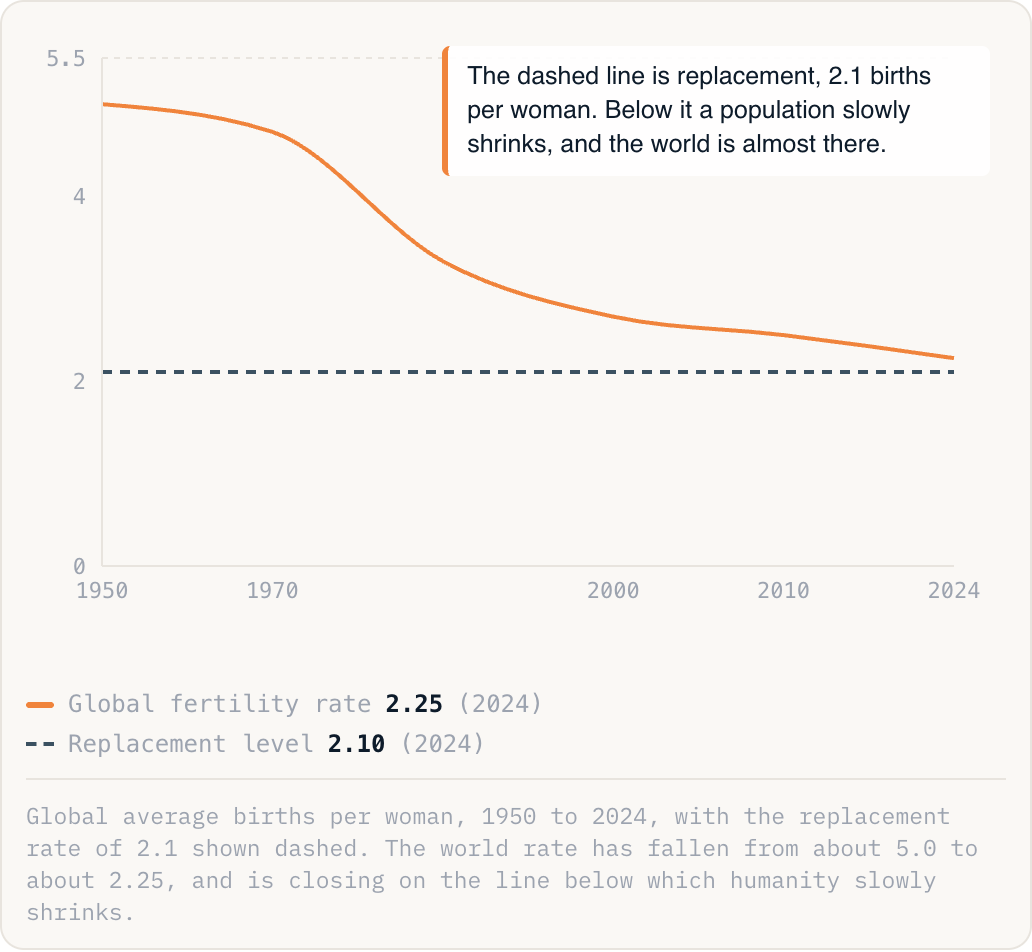
The dashed line is replacement, 2.1 births per woman. Below it a population slowly shrinks, and the world is almost there.
Global fertility rate2.25(2024)Replacement level2.10(2024)
Global average births per woman, 1950 to 2024, with the replacement rate of 2.1 shown dashed. The world rate has fallen from about 5.0 to about 2.25, and is closing on the line below which humanity slowly shrinks.
Why this is happening
- As countries grew richer, child mortality collapsed and parents no longer needed many births for a few to survive, so family sizes fell.
- Girls' education, women in paid work and cheap contraception gave women real control over how many children to have, and most chose fewer.
- The decline spread from the rich world to almost everywhere; today most of humanity already lives in countries below replacement.
The take
Peak humanity is now in sight this century. Every model in economics assumed an ever larger population to grow into; that core assumption is quietly expiring in our lifetimes.