MacroSnaps13 July 2026
No. 08In 2020 and 2021 interest rates fell to their lowest in centuries, some historians say in 5,000 years.
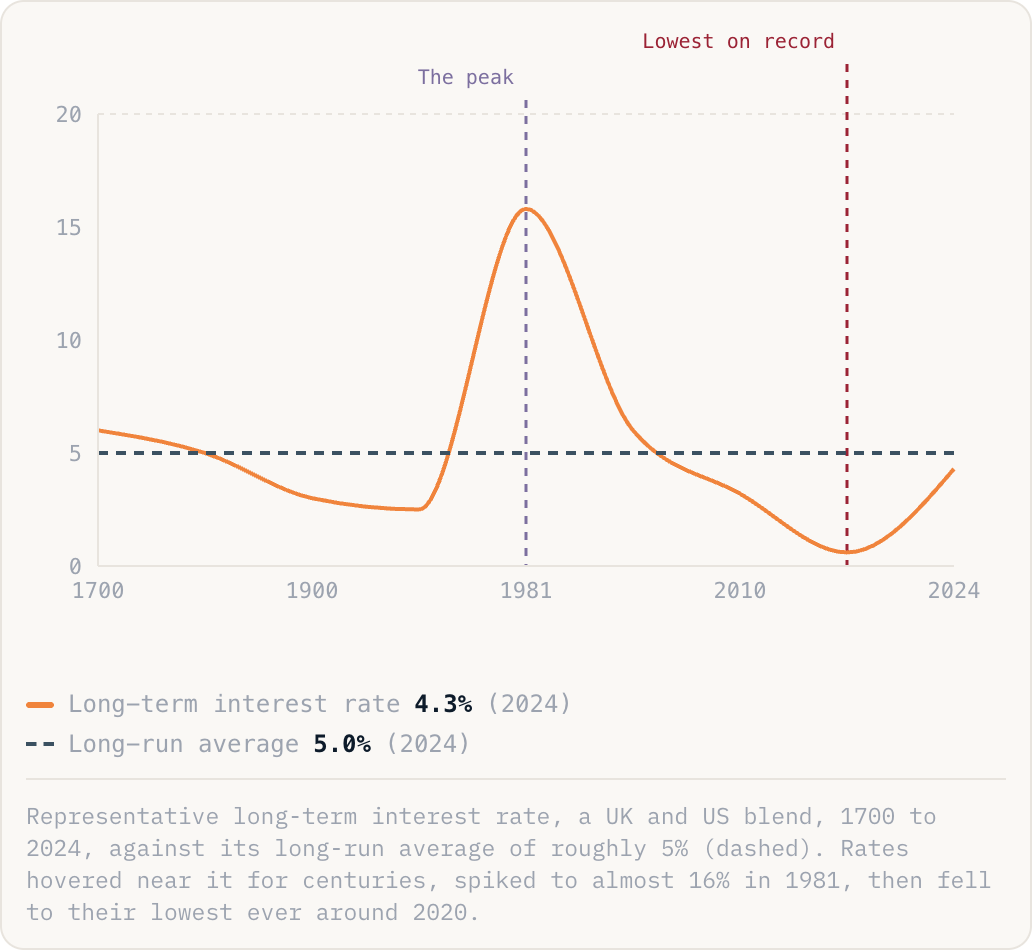
Long-term interest rate4.3%(2024)Long-run average5.0%(2024)
Representative long-term interest rate, a UK and US blend, 1700 to 2024, against its long-run average of roughly 5% (dashed). Rates hovered near it for centuries, spiked to almost 16% in 1981, then fell to their lowest ever around 2020.
Why this is happening
- After the 2008 crash and again in 2020, central banks cut policy rates to near zero and bought bonds in bulk to hold long-term rates down.
- Ageing, high-saving societies generated more capital than the economy could profitably absorb, pushing the price of borrowing, the interest rate, toward the floor.
- Weak inflation for a decade gave central banks room to keep rates exceptionally low for far longer than usual.
The take
A rate near zero made borrowing almost free and inflated the price of everything from houses to shares. The sharp climb back since 2022 is the bill arriving, and a lot of cheap-money bets were priced for a world that has gone.