MacroSnaps7 July 2026
No. 05The US now spends more on interest on its debt than on its entire military.
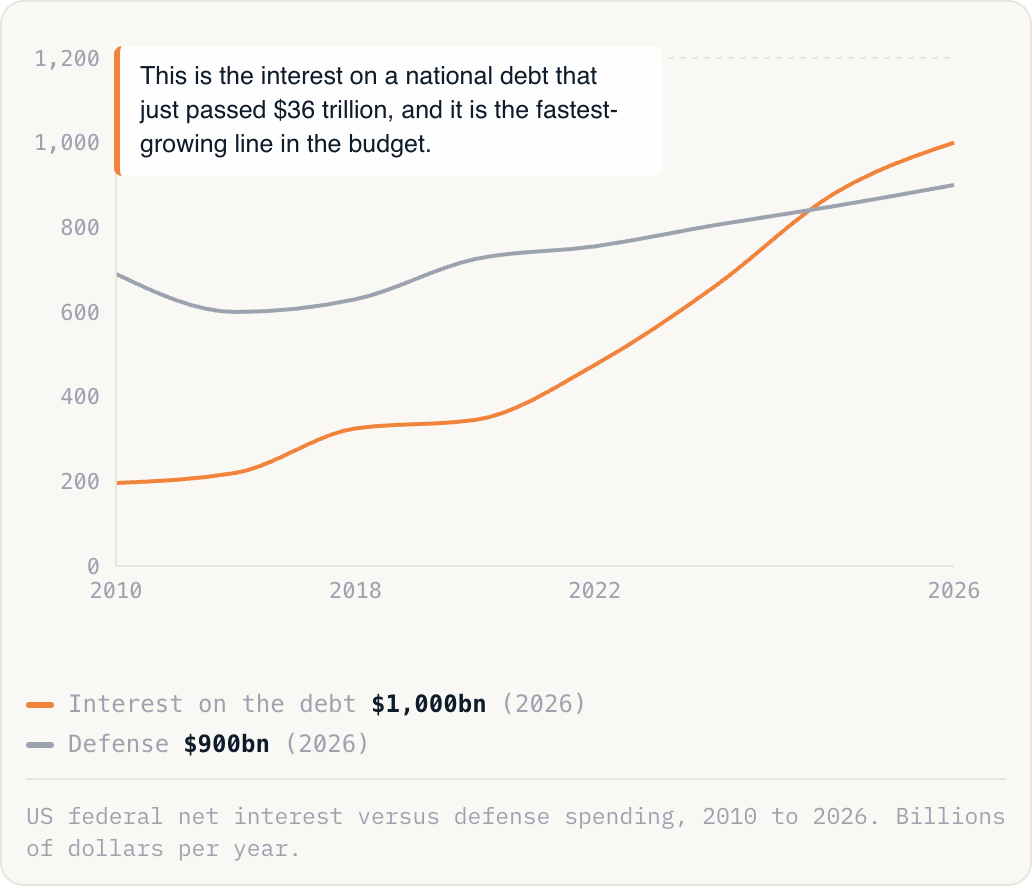
This is the interest on a national debt that just passed $36 trillion, and it is the fastest-growing line in the budget.
Interest on the debt$1,000bn(2026)Defense$900bn(2026)
US federal net interest versus defense spending, 2010 to 2026. Billions of dollars per year.
Why this is happening
- The federal debt just passed $36 trillion, and interest is owed on every dollar of it.
- Most of that money was borrowed years ago, when interest rates were near zero. As those old loans come due, Washington does not pay them off. It takes out new loans at today's interest rates of around 5%. That is why the interest bill has roughly tripled since 2021.
- The defense budget is argued over and voted on every year, so it grows slowly. The interest bill is never voted on: it is the debt times the interest rate, and it gets paid automatically, in full.
The take
Interest is now one of the biggest items in the federal budget, bigger than the military, and it buys nothing new: it pays for borrowing that already happened. Congress cannot cut it with a vote. It falls only if interest rates fall or deficits shrink, and until one of those happens, interest keeps taking money that could have gone to defense, roads or tax cuts.
Source: US Treasury, OMB (2026)